Hydrogen Inhalation for Sleep: What a 66-Person RCT Found
Published 2026-07-16 · Source: PubMed PMID 40826930
Quick answer
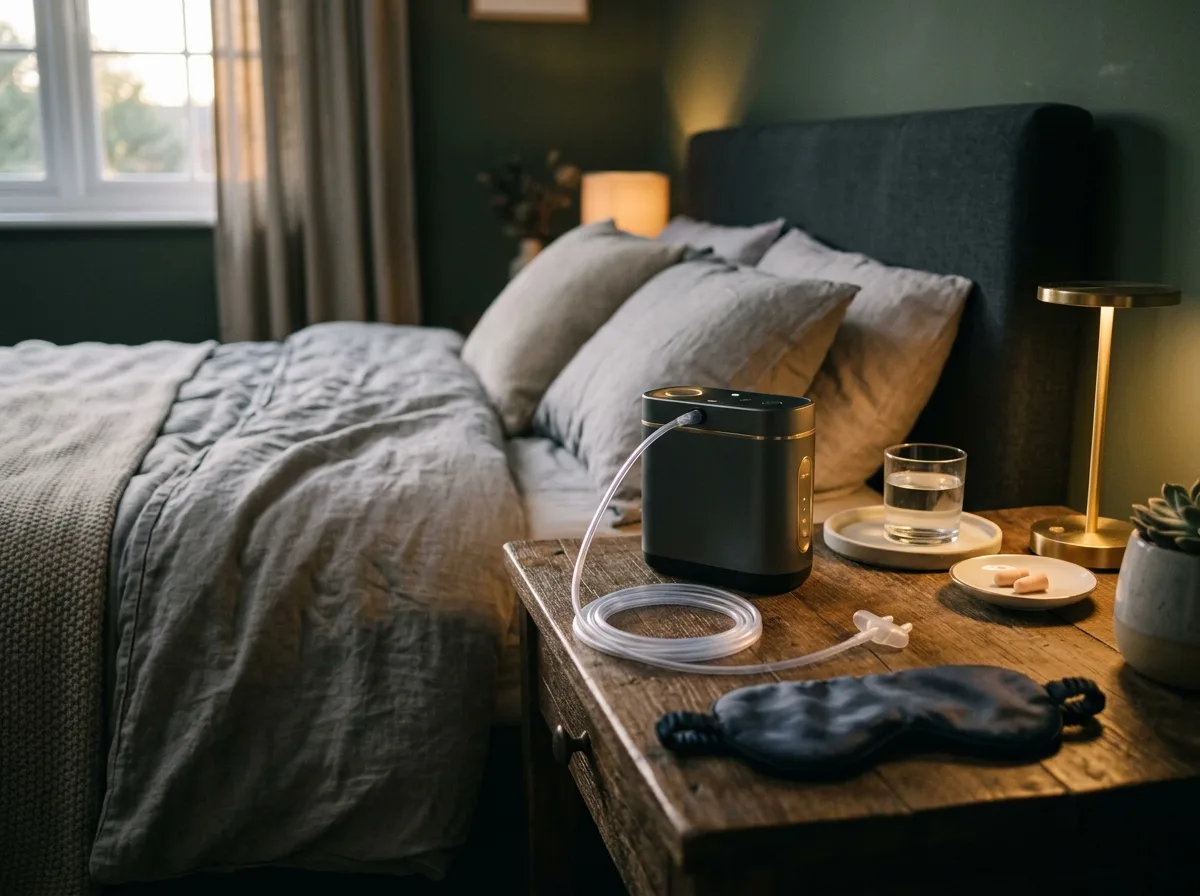
A 2026 randomized controlled trial (Gao et al., Medical Gas Research) tested hydrogen-oxygen inhalation — breathed through a nasal cannula, not sipped as water — in 66 people with sleep disorders over seven days. The hydrogen group slept longer, more efficiently, and woke less, and their depression scores improved. Anxiety scores, though, didn't change. A real positive signal, tempered by the short window and single-blind design.
What the study did
Sixty-six participants with sleep disorders were randomly assigned to a control group or a hydrogen-oxygen group that inhaled the gas mixture through a nasal cannula for seven days. Sleep and mood were tracked with three standard tools — the Pittsburgh Sleep Quality Index (PSQI), the Self-Rating Depression Scale (SDS), and the Self-Rating Anxiety Scale (SAS) — plus an Actiwatch to objectively measure total sleep time, sleep efficiency, and time spent awake. The trial is registered (ChiCTR2400084103).
What it found
- The control group showed no significant change in sleep across the week.
- The hydrogen-oxygen group improved total sleep time and sleep efficiency on days 3, 5, and 7, and cut wake time on days 3 and 7.
- Head-to-head, the hydrogen group had more total sleep and less wake time than control.
- After 7 days, its PSQI (sleep quality) and SDS (depression) scores were lower than control.
- Anxiety (SAS) did not differ significantly between the groups.
What this means for you
Short-term hydrogen-oxygen inhalation may help people with disrupted sleep get more, and better, rest — and may ease low mood alongside it. That said, this was a device-based inhalation therapy, not drinking hydrogen water, so the two aren't interchangeable.
The honest limits: it was single-blind (participants knew less than the researchers, which leaves room for expectation effects), ran only seven days, and left anxiety untouched. It's an encouraging early result worth a longer, double-blind trial — not a reason to swap out sleep care your doctor has prescribed.
More on this topic: Hydrogen for Depression Support
Every summary here is written independently, positive or not. How we review the research.
Educational information only, not medical advice. Individual results may vary.